
On Posted on by Benzo Health to Mental Health Resources
Anxiety can affect anyone. Work, relationships, money, health, and responsibilities can all create it. Sometimes it is normal. It can even help you stay alert during difficult situations.
But frequent attacks can become difficult to manage. You may feel restless, worried, and unable to relax. You may also have trouble sleeping and concentrating.
The good news is that small changes can help. Therapy, healthy habits, proper management, and expert support can help. With the right approach, you can learn to manage your thoughts and feel in control.
Notice when these feelings appear and what may trigger them.
Some people feel it before meetings and social events. Others worry about health, finances, family, and work. It may also appear without an obvious trigger.
Keep track of situations that make you feel tense. Notice your thoughts, emotions, and physical symptoms. This can help you recognize patterns.
Common physical symptoms are a fast heartbeat, sweating, and muscle tension. There can be trembling and stomach discomfort. It can also cause racing thoughts and difficulty focusing.
Recognizing these signs can help you respond before this issue becomes overwhelming.
A proper routine can provide a sense of stability. Try to wake up and go to bed around the same time each day.
Regular sleep supports physical and emotional health. Lack of sleep can make these feelings harder to manage.
Include time for meals, work, exercise, relaxation, and activities you like. You do not need a flawless routine. A simple schedule can still make your day feel manageable.
Avoid filling every part of your day with tasks. Give yourself short breaks between responsibilities.
This problem can cause your inhalation to become faster and shallower.
Slow breathing can help your body relax.
Sit in a comfortable position. Relax your shoulders and take a slow breath. Then breathe out gently through your mouth.
Repeat this for several minutes. Focus your attention on the movement of your breath.
You can practice this technique at home, at work, or before a tough situation. Regular practice may make it easier to use.
Exercise can support mental health and help reduce worries. You do not need a workout to benefit.
Walking and gentle exercise can become part of your routine. Even a short walk can give you time away from difficult thoughts.
Choose an activity that you like. You are more likely to continue something that feels realistic and nice.
Regular physical activity can also support better sleep. This may help with management of the problem.
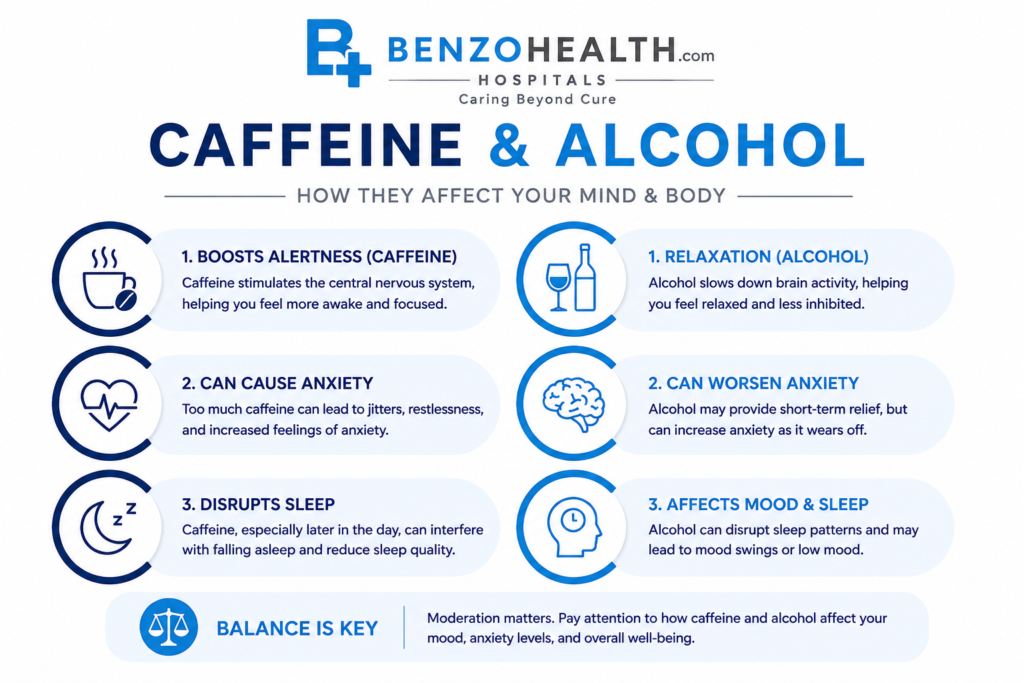
Certain substances can affect symptoms.
Caffeine can increase alertness and may cause nervousness in some people.
If coffee, energy drinks, and other such products make you feel anxious, consider reducing your intake. Avoid making sudden major changes without considering your health and habits.
Alcohol may feel relaxing at first. But it can affect sleep and mood. Using it to cope with the situation can also create unhealthy patterns.
If you regularly use alcohol and other substances to manage this problem, speak with a doctor.
It usually makes problems feel larger than they are. You may imagine the worst possible outcome. You may repeatedly think about something you cannot control.
When this happens, pause and examine the thought.
Ask yourself if you have evidence to support it. Consider if there may be another explanation. Think about what you would tell a friend facing the same situation.
Responsibilities can increase pressure. Learning to set limits can protect your time and energy. You do not need to accept every thing. It is okay to say no when something seems too much. Set realistic expectations for yourself. Trying to do everything well is not going to help. Focus on what you can control. Break large tasks into smaller things and complete them one at a time.
Worry can make life feel focused on problems. Make space for things that bring happiness. This will give your mind a break from constant worry.
Talking with someone you trust can make difficult feelings easier to manage.
You do not need to solve every problem alone.
Daily things can help. But some people need expert support.
Therapy can help you understand the problem and develop coping abilities.
It can help you recognize unhelpful thought patterns. The option to be used will be based on your symptoms and needs.
Family therapy can help when this affects family life. Group therapy can also provide support from people facing these problems.
In some cases life gets affected. In these situations, a doctor may consider a drug as part of treatment.
The right option depends on the type and severity of symptoms. Your expert will consider your medical history and other factors before making a recommendation.
These should only be taken as prescribed. Some can cause side effects and dependence. So medical supervision is needed.
It usually works best when combined with therapy and better daily habits.
An occasional issue does not always require treatment. But persistent and severe symptoms can be a problem.
Consider speaking with an expert if it affects your sleep, work and daily activities. You should also get support if you find it difficult to control your worries.
An expert can assess your symptoms and help in giving a treatment.
If you experience thoughts of harming yourself and feel unable to stay safe, get emergency help.
Managing this issue does not require changing your entire life in one day. Start with small things that feel realistic.
When it continues to interfere with daily life, expert support can help. Therapy can provide practical tools and a safe space to discuss difficult feelings.
With support and healthy habits, this problem can become more manageable.
Mild nervousness may improve when tension decreases. But persistent symptoms may need support and treatment.
Yes, it can support mood and improve sleep. This may help manage the symptoms.
Yes. It can. It can make nervous thoughts and physical symptoms difficult to manage.
Yes. It can help you understand the triggers, change unhelpful thought patterns, and develop better coping skills.
You can consider their help when it regularly affects your sleep, relationships, work, or ability to manage daily activities.
Benzo Health is here to offer you and your loved ones quality mental health treatment. Our Florida-based centre is catered specifically to you. You are not alone; give us a call today!